How IPXO Increased Offer Acceptance from 60% to 90%: Lessons from a Startup Pace
Evita Balachovič
October 29, 2025
October 24, 2025
Culture and branding
If you have felt changes in the hiring market over the past few years, you are not imagining it. We spoke with IPXO’s Head of HR, Reda Baltrušaitienė, to understand how their job offer acceptance rate climbed from about 60% a few years ago to about 90% last quarter. In short, several factors played a role: a clearer product story, a stronger hiring process, a more mature market and a better understanding of what different candidates actually value.
IPXO is a global technology company building an IP address marketplace platform. It helps organizations monetize unused IP addresses, while others can rent them globally. The company also provides IP reputation checks and email deliverability monitoring tools.
From what we see at TalentHub, candidates already value employers who are clear about salary. It saves everyone's time and creates trust before the first conversation even happens. So yes, there is a compliance cost, but I think good employers can turn it into a very real recruitment advantage.
Reet Kaurit
Co-founder of TalentHub
A Hiring Process that Balances Flexibility and Structured Logic
IPXO follows a few core stages that are adapted by role, but always keeping the same philosophy: clarity, pace and a real view of the role.
Need and requirements. The hiring manager and HR align on must-have competencies, soft skills, and success criteria.
Screening. Reviewing CVs and profiles to respect everyone’s time.
HR intro. Context on the product, culture, goals and expectations.
Manager and peers. Candidates meet the people they will work with and see the real day-to-day.
Technical stages. Used only where they truly add value, depending on the role.
For leadership roles. Stakeholders or shareholders join to close any open questions before the offer.
This waycandidates see the real team, the real work and clear expectations early. This reduces late-stage surprises, which is when offers most often fall through.
What Candidates Really Care About
Compensation still matters, but it rarely decides the outcome on its own. IPXO’s experience shows:
IT/tech roles. The product and impact matter most: what problems it solves and what impact the specialist can make.
Sales roles. A motivating bonus structure, belief in the product and a compelling market with room to grow.
Everyone. An interesting, global product with real impact, flexibility, a culture of trust, growth opportunities, flexible work hours and the option to work in a hybrid model.
“For engineers, interesting problems and impact matter more than compensation alone.”
If your pitch does not answer “what will I build or change in my first 90 days?”, you risk losing the candidate.
How to Increase Offer Acceptance
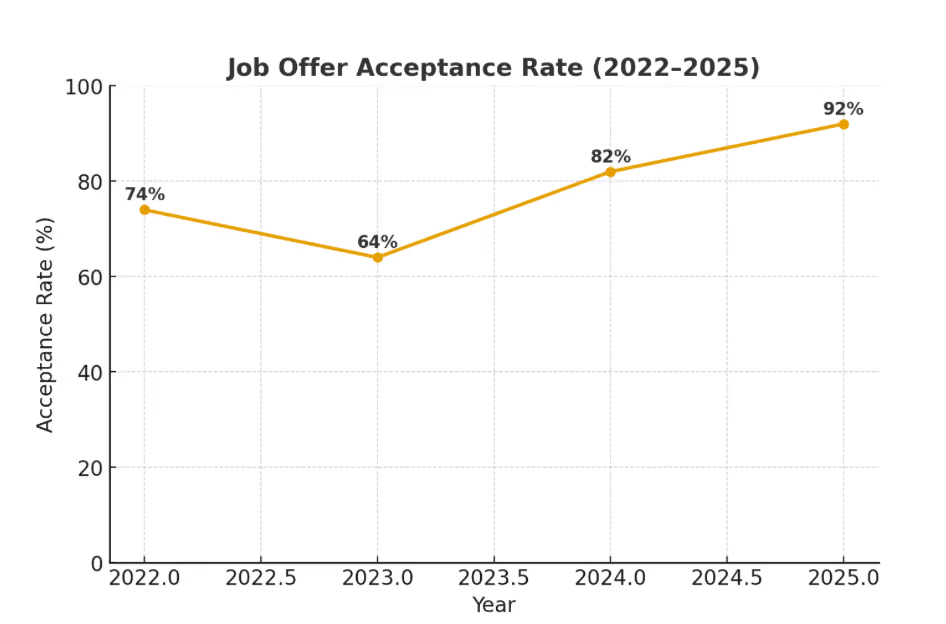
These insights are based on IPXO’s internal data showing how offer acceptance changed from 2022 to 2025.
Two main forces were at play.
Market shift. The market moved from candidate-led to more balanced. It became more mature and less impulsive. People do not jump into every interview, they think carefully about whether it is worth it. Often, when a candidate enters a process, they are almost decided on the role type or company.
A clearer company story. As IPXO grew, the product narrative became easier to grasp and the value proposition more concrete. Candidates can picture success and feel confident saying yes.
Bottom line: you cannot control the market, but you can control your story and clarity. IPXO’s growth improved not only product results, but hiring outcomes as well.
Why Candidates Decline and How to Prevent It
The most common reason is counteroffers from current employers. Other reasons include role changes or shifting company needs during the process.
What to do:
Surface risk early. By stage two, ask about potential talks with the current employer or internal mobility.
Do not rely on compensation alone. Capture the candidate’s top three motivators, for example project, impact, team and revisit them in each conversation.
Shorten the gap. Reduce the time between final interview, offer and acceptance. Keep the relationship warm during the notice period.
Cultural Fit or Skill Set: What Matters More
IPXO seeks balance. Cultural misalignment becomes a problem over time for both the person and the team, so culture is usually a must-have. The only exception is highly isolated individual contributor roles. Otherwise, both culture fit and capability matter.
“There is no universal model. Every company has to define its own EVP.”
Employer Value Proposition: Why It Matters for Startups
Five practical steps worth applying, all used at IPXO:
Front-load clarity. In the first call, cover mission, product, responsibilities, success criteria and the hiring process.
Show the work. For IT roles: tech stack, architecture, problems. For sales and marketing: budgets, tools, targets.
Include the team. Let candidates meet their manager and peers to get a real picture.
Write your EVP. Three to five clear points repeated in job ads, outreach and interviews. IPXO’s strengths: a unique market, global reach and meaningful problems.
Be prepared for counteroffers. Clarify motivators, keep momentum and maintain contact through pre-boarding.
Why Early-Stage Playbooks Do Not Always Scale
Lessons from the first ten hires do not necessarily fit today’s organization, a more mature product or a new growth stage. The takeaway is clear: hiring principles should evolve together with the company and its structure.
Candidate Experience Still Wins
Regardless of market conditions, candidate experience pays off.
Respect for time: clear timelines and short cycles.
Useful feedback, even on rejections.
Human communication. People remember how you made them feel and they share that with others.
IPXO stresses this point. Even if someone is not selected now, you never know where the journey will lead. Your paths may cross again in six months and a relationship you maintained can become a major advantage.
Summary
IPXO increased offer acceptance from about 60% to about 90% thanks to a clearer product story, a more mature market and a hiring process that reduces surprises.
Counteroffers remain the top reason for declines. Identify the risk early.
Different roles need different value propositions. For IT talent, the key is an interesting, global product with real impact, flexibility, a culture of trust and growth opportunities.
Define and repeat your EVP. There is no one-size-fits-all recipe.
A big thanks to IPXO’s Reda Baltrušaitienė for sharing their hiring insights.
Want to improve your offer acceptance rate? TalentHub designs hiring processes candidates actually say yes to, from EVP to interview orchestration to counteroffer prevention. Get in touch and we will map out quick wins for your team.